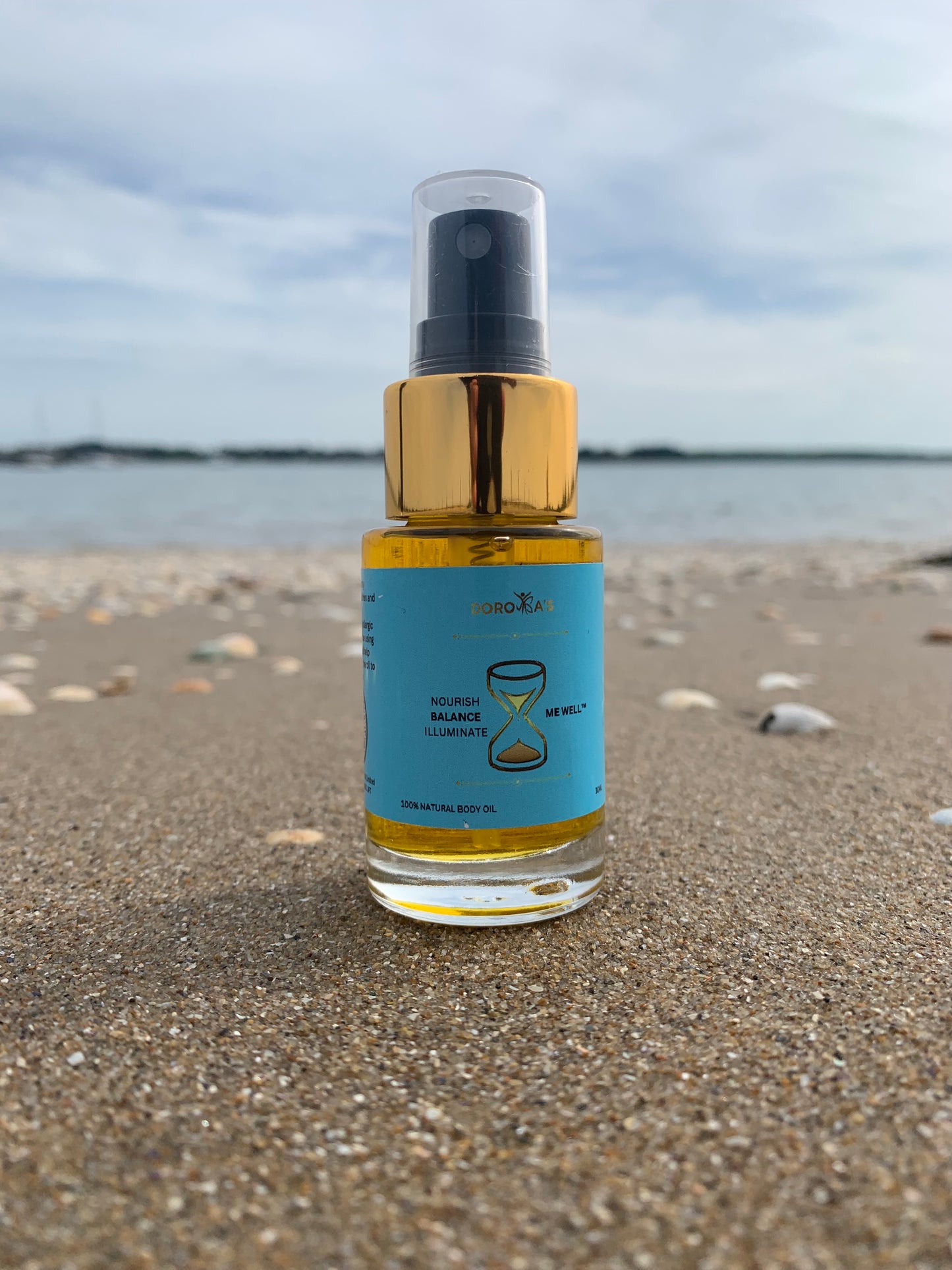
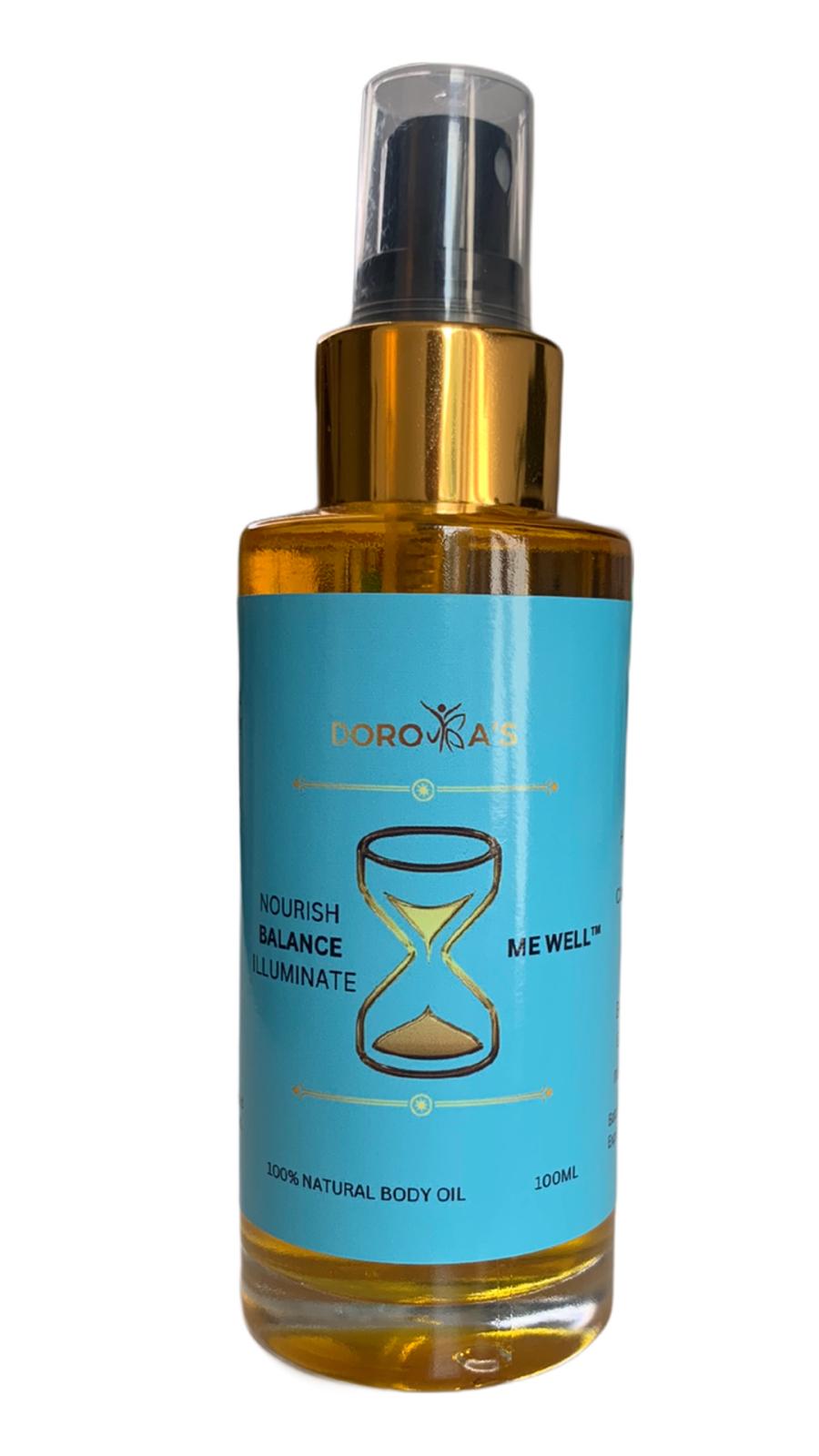
Why Your Moisturiser Is Mostly Water (And What Mature Skin Actually Needs)
Share
You have probably used the same moisturiser for years. You apply it every morning, occasionally at night, and accept that your skin is what it is. A little dry. A little dull. Not quite what it was.
What if the product you trust most is the one letting you down?
The ingredient you are paying for but not keeping
Turn over almost any body lotion or cream and read the ingredients list. The first ingredient, always listed in descending order of concentration, is almost always aqua. Water. In most mainstream moisturisers water accounts for 60 to 80 percent of the formula. The rest is a combination of thickeners, preservatives, synthetic fragrance and a small percentage of anything that might actually benefit your skin.
Water feels good when you apply it. It sits on the surface, gives a brief sensation of hydration and then, within twenty minutes of application, evaporates. Taking with it some of your skin's own natural moisture as it goes.
For younger skin with a robust barrier function this barely matters. The skin replenishes quickly.
For skin over 40 it is a fundamentally different story.
What menopause actually does to your skin
During and after menopause oestrogen levels decline significantly. Oestrogen is not just a reproductive hormone. It is deeply involved in skin structure and function. It stimulates collagen production, regulates sebum, supports the skin barrier and helps retain moisture at a cellular level.
When oestrogen declines your skin becomes less able to produce its own lipids, the fats that form the protective barrier keeping moisture in and irritants out. Skin becomes thinner, drier and more reactive. Wound healing slows. Collagen production reduces by approximately 30 percent in the first five years after menopause.
This is the skin that water-based moisturisers were not designed for. Their formulas were developed for a broad market, for average skin, for a barrier function that is still largely intact. Mature skin needs something fundamentally different.
Why oil is not what you think it is
The word oil in skincare still makes some women hesitate. Decades of marketing from water-based brands have created an association between oil and greasiness, between oil and breakouts, between oil and something your skin does not need.
The biochemistry tells a different story.
Your skin's natural moisture barrier is largely made up of lipids, oils. Ceramides, fatty acids, cholesterol. The oils that work best in skincare are those with fatty acid profiles that most closely resemble the skin's own natural structure. When you apply these oils your skin recognises them. It absorbs them rather than sitting them on the surface. They do not evaporate. They integrate.
Botanical oils like meadowfoam seed oil contain fatty acid profiles that are structurally compatible with human sebum. They absorb without residue, nourish at a level that water cannot reach and do not require the preservatives, emulsifiers and synthetic stabilisers that water-based formulas depend on.
Every ingredient in a properly formulated anhydrous, waterless, oil has earned its place. There is no water to pad the formula, no thickeners to create texture, no heavy preservatives to prevent bacterial growth. Just oils, actives and the skin that receives them.
The preservation problem nobody talks about
Water does not just dilute your formula. It creates a biological environment in which bacteria, mould and yeast thrive. This is why water-based skincare requires preservatives. Some preservatives are benign. Others are not. And for mature skin that is already more reactive and more sensitised than it once was, the preservative system in your moisturiser may itself be contributing to the irritation you are trying to address.
Anhydrous formulas need no preservatives because there is no water present for microbial growth. The formula is inherently stable. What you put on your skin is what the formula intended, with nothing added to keep it safe from its own water content.
The aromatherapy dimension
There is a second reason oils outperform creams for mature skin that goes beyond biochemistry.
The right botanical oils, properly blended with essential oils, do something a cream cannot. They deliver active aromatic compounds to your olfactory system the moment you apply them. Your olfactory nerve is the fastest sensory pathway to the brain, reaching the limbic system, the centre of emotion, memory and stress response, in approximately 0.2 seconds.
The right blend can lower cortisol before the oil has even absorbed. It can lift mood, restore calm or sharpen focus depending on what the formula contains. A cream in its water-based format cannot do this. The aromatic compounds disperse differently, diluted by water, altered by the emulsification process.
An oil delivers them directly and immediately.
What this means in practice
If your skin feels perpetually dry despite daily moisturising, the answer may not be more moisturiser. It may be a different kind of product entirely. One that works with the changed biology of mature skin rather than against it. One without water, without the preservatives water requires, without the dilution that makes most moisturisers feel good for twenty minutes and do little after that.
Your skin knows the difference between water dressed as luxury and something that actually works.
The question is whether you do.
#notforeverybody