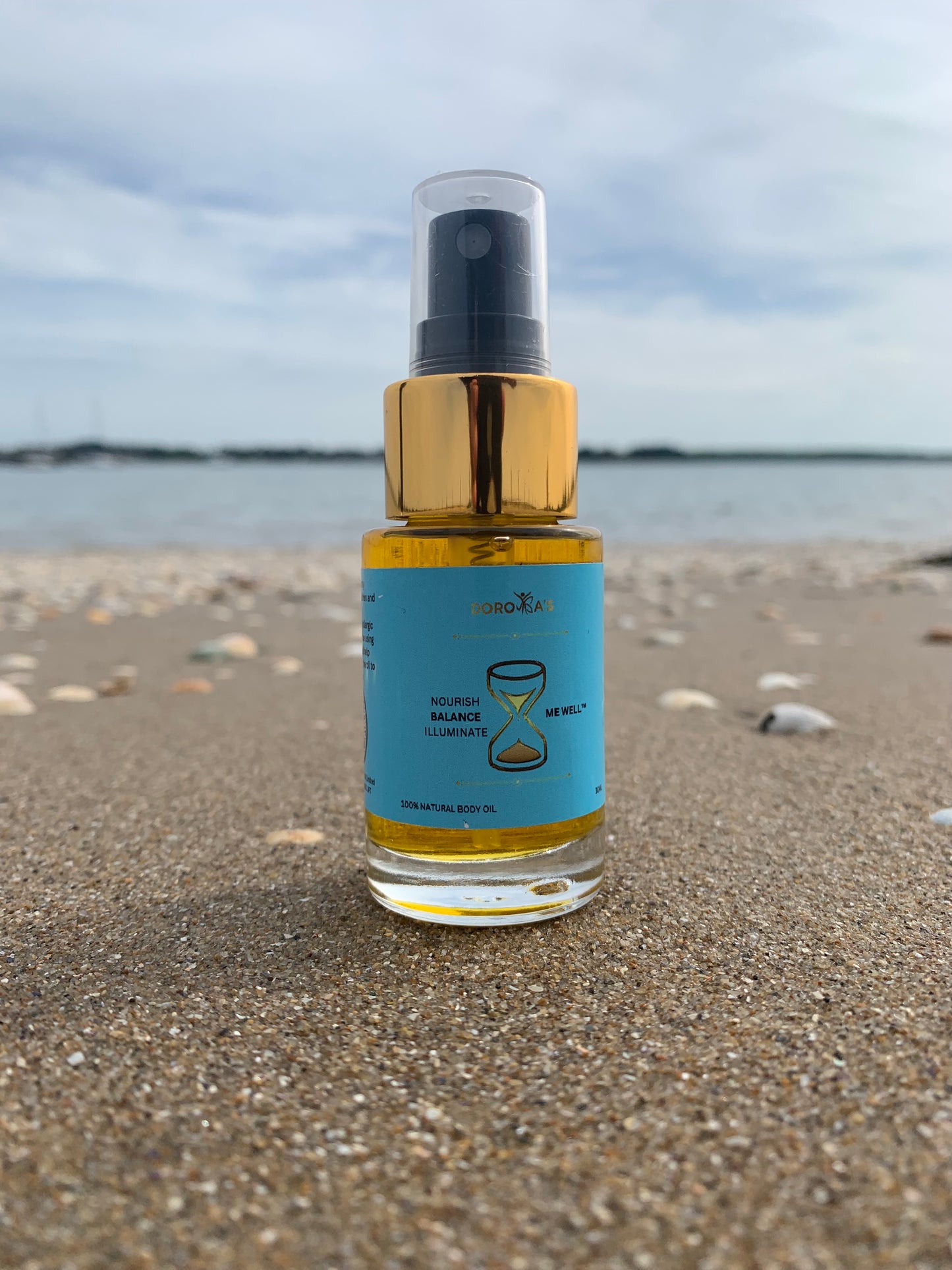
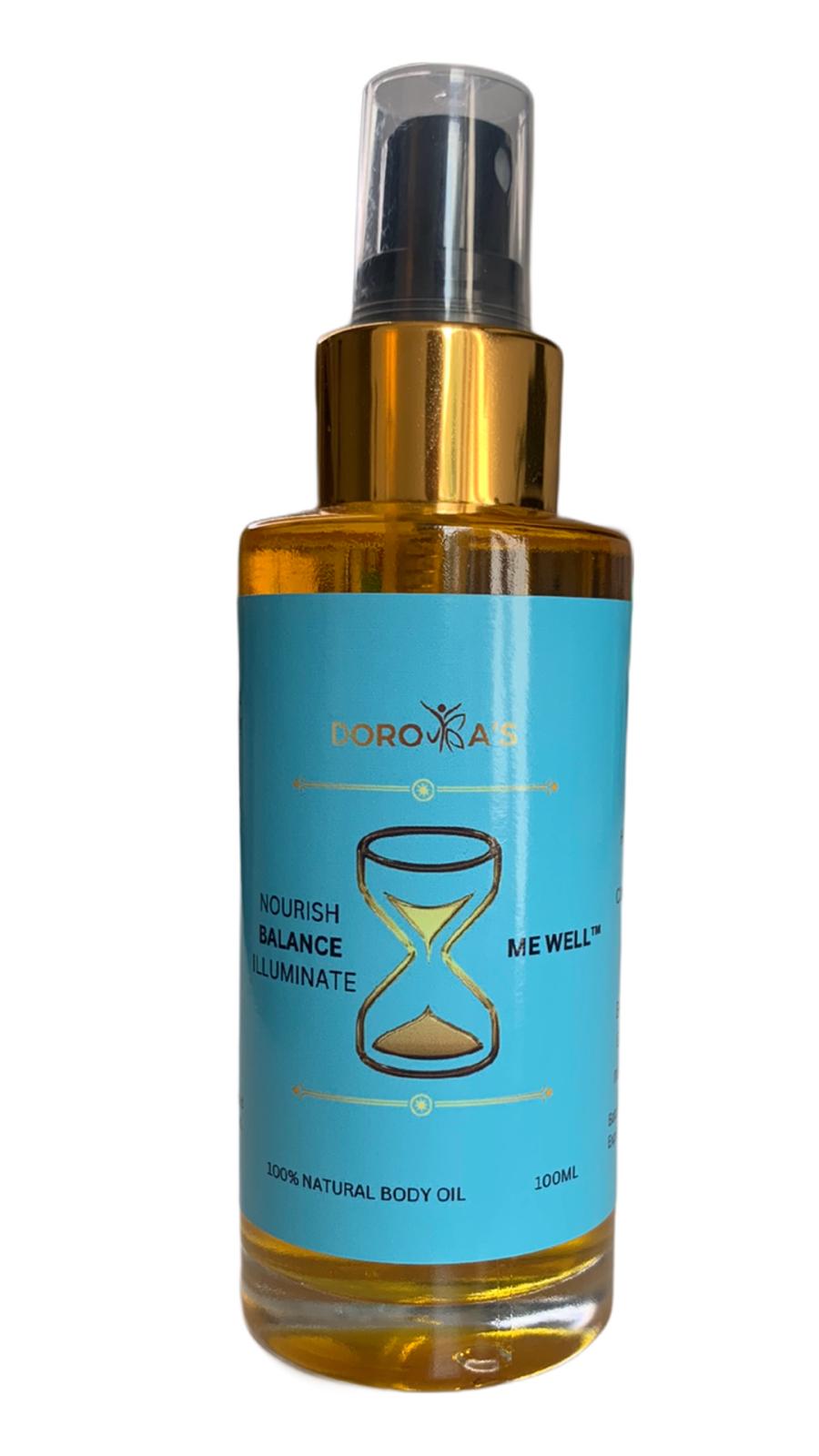
The Dirty Secret of “Luxury” Body Oils on Marketplaces
Share
If you’ve ever scrolled Amazon looking for “luxury body oils” under £10, this one’s for you.
Because recently, I went down a rabbit hole.
A deep one.
A disturbing one.
The kind of rabbit hole that makes you want to wash your hands afterwards.
I was curious: How do these super-cheap brands manage to describe their oils as “pure,” “natural,” “luxurious,” and “premium” when their prices don’t even cover the cost of a decent bottle?
So I did what any educated consumer would do:
I checked the ingredients.
And what I found was… shocking.
Actually shocking.
Not just “I’m being dramatic for a blog” shocking.
The First Red Flag: No INCI List Anywhere
Under UK law (and EU law), ANY cosmetic product sold to a consumer must list full ingredients in INCI format — the internationally recognised naming system for cosmetics.
Yet many Amazon listings?
They’ll list three nice-sounding oils (argan! coconut! jojoba!)…
… and nothing else.
No full ingredient list.
No INCI names.
No allergens.
Sometimes, not even the carrier oil.
This is illegal, by the way.
Not “sort of illegal.”
Not “grey area.”
Illegal.
If you sell a cosmetic product in Great Britain, the packaging must carry a full INCI ingredient list (the international, standardised names—not “olive oil” one day and “olio d’oliva” the next). This comes from the GB version of the EU Cosmetics Regulation (EC) No 1223/2009. GOV.UK+2GOV.UK+2
The Second Red Flag: Ingredients Out of Order, or ‘Ratio Confidential’
One brand actually had the nerve to write:
“Ratios are confidential.”
Excuse me?
Cosmetic law literally says ingredients must be listed in descending order by weight.
Why?
Because consumers have the right to know if your “luxury argan oil blend” contains…
0.5% argan oil
… and 99% cheap mineral oil.
(Which is exactly what many of these blends do.)
When a brand says the order or ratio is “confidential,” what they mean is:
“If you knew how little of the premium ingredients we use, you wouldn’t buy it.”
The Third Red Flag: Missing Allergens (Illegal and Dangerous)
Under UK law, if an ingredient contains certain fragrance allergens above a tiny threshold, they must be declared on the label.
Not optional.
Not “depending on your vibe.”
Mandatory.
But many Amazon oils?
Fragrance listed as “parfum.”
Allergens?
Nowhere.
That means people with eczema, allergies, sensitivities — literally anyone — are applying something to their skin blindly.
Imagine buying food without an allergy label.
You wouldn’t accept it.
So why accept it on something you rub into your largest organ?
And if your scent contains any of the regulated fragrance allergens, they must be named on the label when they exceed threshold levels (typically 0.001% in leave-on products, 0.01% in rinse-off). Those rules have recently expanded to cover more allergens—meaning more labels should be listing them, not fewer.
The Fourth Red Flag: Luxury Descriptions, 60p Formulas
Here are some of the phrases I found:
-
“Spa-grade luxurious oil”
-
“Premium aromatherapy blend”
-
“100% natural botanical infusion”
-
“Holistic wellness oil”
And when you finally dig through the listing text?
You find it contains:
-
Mineral oil
-
Synthetic fragrance
-
Cheap filler oils
This isn’t aromatherapy.
It’s aromatherapy cosplay.
SIDEBAR: HOW TO READ AN INCI LIST (AND NEVER BE FOOLED AGAIN)
1. Ingredients must be listed in order of highest to lowest percentage.
If Argania Spinosa Kernel Oil (argan) is at the bottom, that means… there’s barely any in there.
2. “Parfum” isn’t enough — allergens must be listed.
Look for:
Linalool, Limonene, Geraniol, Farnesol, Citral, Benzyl Alcohol, Eugenol…
These aren’t “bad” — they’re simply part of essential oils. You NEED to know they’re there.
3. Botanical names = real plant oils.
Cocos Nucifera Oil = Coconut Oil
Simmondsia Chinensis Seed Oil = Jojoba
Copaifera Officinalis Resin = Copaiba
Chamaemelum Nobile Oil = Roman Chamomile
If the list is full of vague language like “perfume oil,” “naturals,” or “botanical scent,” assume synthetic fillers.
4. If the ingredient list is missing: the product is non-compliant.
Full stop.
You shouldn’t buy it — and the seller shouldn’t be selling it.
And Here’s the Part No One Talks About: Small Artisan Brands Are Doing It Right
Let me say something loudly and clearly:
Small artisan skincare brands aren’t the problem.
They’re the standard.
We:
Formulate responsibly
Follow UK & EU cosmetic regulations
Declare ALL ingredients
Declare ALL allergens
Pay for CPSRs (Cosmetic Product Safety Reports)
Register with the correct portals
Use real, high-quality ingredients - not synthetics
Produce in small batches for quality and freshness
It’s not cheap.
It’s not easy.
And it’s not something you can fake.
And unlike factories pumping out 10,000 low-quality units a day, small-batch makers actually:
-
Read every regulation
-
Choose ingredients that support skin and wellbeing
-
Hand-make and hand-check every batch
-
Care about what goes onto your body
-
Care about you
So when you come across a bottle of “luxury oil” on Amazon for £6…
Ask yourself:
Who’s paying the real cost?
You?
Your skin?
Your safety?
Because artisan makers aren’t cutting corners.
We’re doing the opposite:
Putting in the extra time, money, and care because we believe real products should be made with integrity.
If something is going on your skin — your biggest organ — you deserve the truth.
Full ingredient lists.
Correct allergens.
Real formulation.
No fake luxury words.
No hiding behind “confidential ratios.”
A real natural body oil should be transparent, honest, safe, and beneficial.
Anything else?
It doesn’t deserve space on your skin — or your bathroom shelf.